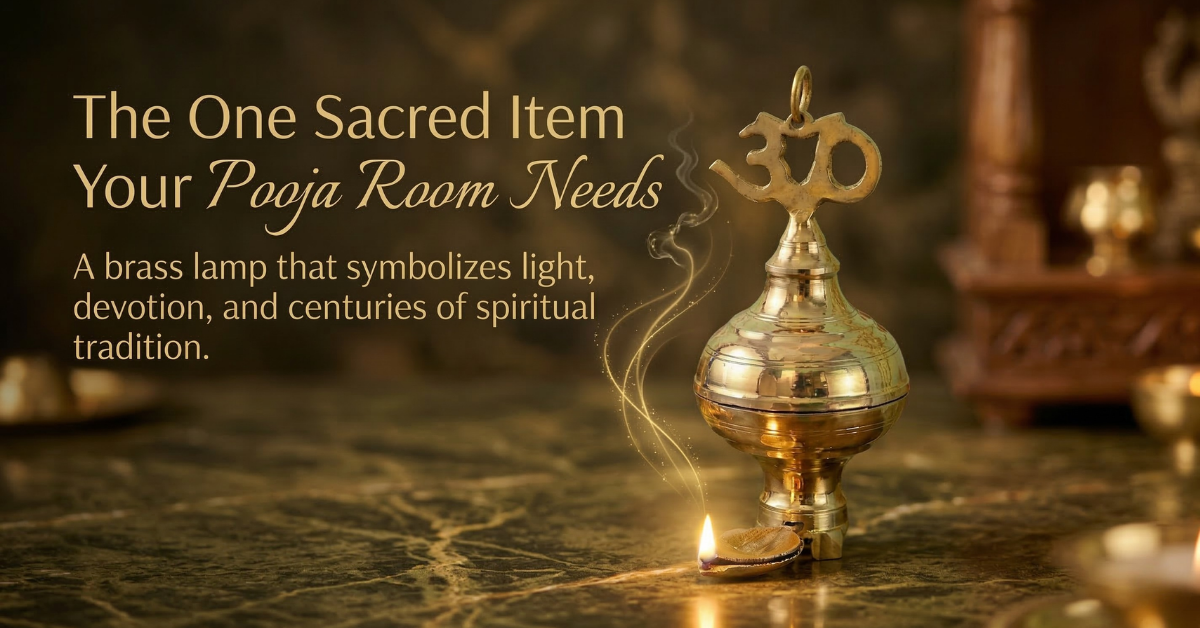
Walk into almost any traditional Indian home during morning prayers, and you’ll notice something glowing softly near the deity. It isn’t just the flowers, incense, or idols. It’s the brass lamp, often quietly sitting in the center of the pooja space.
But here’s an interesting question.
Is your pooja room truly complete without one?
Many people decorate their prayer space with idols, photos, incense holders, and bells. Yet the humble brass diya or brass lamp often carries deeper meaning than most of us realize.
Let’s explore why this one item has remained a must-have in Indian homes for centuries—and why you might want to check if your pooja room has one too.
In Hindu tradition, lighting a lamp is more than a ritual. It symbolizes removing darkness and inviting knowledge, prosperity, and positive energy into the home.
The flame itself represents:
Knowledge over ignorance
Good over evil
Hope over negativity
When you light a brass lamp in your pooja room, you’re essentially creating a symbolic space where light wins over darkness every single day.
Sounds simple, right?
But this daily act carries deep spiritual importance. Many scriptures mention that lighting a lamp during prayer invites divine energy into the home.
That’s why elders often say:
“A house where a lamp burns during prayer will never lack blessings.”
You might wonder:
Why brass specifically? Why not steel or aluminum?
There are actually several traditional and practical reasons.
In many Indian traditions, brass is considered a sattvic metal, meaning it promotes purity and positive vibrations.
That’s why brass is widely used for:
Bells
Kalash (sacred pots)
Pooja thalis
The belief is that brass helps retain spiritual energy during rituals.
Steel may be cheaper. Plastic may be convenient.
But brass?
Brass items often last for generations.
Many families still use lamps passed down from grandparents. It’s not just a pooja item anymore—it becomes a family heirloom.
Let’s be honest.
There’s something visually calming about the warm golden glow of a brass lamp. When the flame reflects on the polished surface, the entire pooja room feels peaceful and sacred.
Steel simply doesn’t create the same effect.
Across India, lighting a brass lamp is part of many rituals.
You’ll see it during:
Daily pooja
Festivals like Diwali
Housewarming ceremonies
Weddings
Temple prayers
In fact, in many temples the first ritual of the day is lighting the temple lamp.
The act itself is symbolic. It marks the beginning of prayer and the presence of divine light.
This is one reason many elders insist that every home should keep a brass lamp in the pooja space.
If your pooja room currently has idols and incense but no lamp, you might be missing an important element of the ritual.
Here’s how adding one can change the experience.
Lighting a lamp every morning or evening becomes a moment of pause in your day.
Just a few seconds of lighting the wick can help you reset mentally and spiritually.
The gentle flame naturally draws your attention. Many people find it easier to concentrate during prayer when a lamp is lit.
Some rituals stay alive simply because families continue them.
Lighting a brass diya is one of those traditions that quietly connects generations together.
If you’re planning to add one to your pooja room, here are a few simple tips.
1. Look for solid brass
Heavier pieces are usually better quality and last longer.
2. Choose a stable base
You don’t want the lamp tipping over easily.
3. Pick a design you love
From simple diyas to tall South Indian lamps, there are many beautiful options.
Remember, the goal isn’t decoration alone. It’s about creating a meaningful prayer space.
Sometimes the most meaningful traditions come from the smallest objects.
A brass lamp may look simple, but it carries:
centuries of tradition
spiritual symbolism
cultural continuity
So the next time you look at your pooja room, ask yourself:
Is there a lamp bringing light to your prayers?
If not, maybe it’s time to add that one timeless item.
You might be surprised how much difference it makes.
1. Why is brass used for pooja items?
Brass is traditionally considered a pure and spiritually positive metal in Hindu rituals. It is believed to attract and retain positive energy during prayers, which is why many temples and homes use brass for lamps, bells, and pooja utensils.
2. Can I use a steel lamp instead of brass?
Yes, you technically can. However, brass is preferred because it is more durable, traditional, and spiritually significant in many Indian rituals.
3. When should I light a brass lamp in the pooja room?
Most people light the lamp twice a day—once in the morning during prayer and again in the evening around sunset. These times are considered spiritually auspicious.
4. What oil should be used in a brass diya?
Common oils used include:
Sesame oil
Ghee (clarified butter)
Coconut oil
Different regions in India prefer different oils depending on tradition.
5. How do you clean brass pooja items?
Brass items can be cleaned using:
Lemon and salt
Tamarind paste
Brass cleaning powder
Regular cleaning helps maintain the shine and prevents tarnish.
For more such updates. Check our website!
Since 1976. Pure Brass Pooja Articles & Kitchenware. Crafted with purity. Built to last. Trusted by generations of Indian homes.
Shri Dhanlaxmi Metal Industries
Baswan Galli, Cts No 4142/a/2, Hosur, Near Patson Agency, Belagavi, Karnataka – 590 003
Mob: +91 8296221234
Mob: +91 831 2488376
Email: sales@dmimart.in

No products in the basket.
No products in the basket.